
Introduction to Singapore’s Vibrant Culinary Scene in 2026
Singapore, a melting pot of cultures, has always been synonymous with a rich and diverse culinary landscape. As of 2026, the city-state continues to captivate food enthusiasts from around the world with dazzling food trends that fuse tradition with innovation. Whether you’re a local or a traveler, understanding Singapore’s 2026 food trends offers a unique glimpse into the evolving tastes and gastronomic creativity defining this dynamic city.
Singaporean cuisine is deeply rooted in multicultural influences—Chinese, Malay, Indian, Peranakan, and more—that come together to create an irresistible tapestry of flavors. In 2026, this culinary heritage is evolving with new techniques, sustainability practices, and digital innovations, making it a must-experience journey for any foodie.
Trend 1: Sustainability Takes Center Stage
One of the most significant shifts in Singapore’s food scene this year is the embrace of sustainability. Conscious dining has become more than a buzzword—it’s a movement. Restaurants and hawker stalls alike are now sourcing ingredients locally, reducing food waste, and prioritizing plant-based dishes.
For instance, many establishments are partnering with urban farms around the city, such as ComCrop and Citizen Farm, to secure fresh, zero-pesticide produce. This commitment not only supports local agriculture but also ensures freshness and a smaller carbon footprint. Additionally, zero-waste kitchens are gaining momentum, where chefs creatively utilize every part of the ingredient, such as turning vegetable scraps into broths or using fruit peels for garnishes.
Trend 2: Revival of Heritage Dishes with Modern Twists
In 2026, there’s a profound reverence for Singapore’s culinary roots, with chefs reinventing classic dishes to appeal to modern palates. This trend marries nostalgia with invention, preserving cultural identity while offering novel dining experiences.
Take, for example, the traditional Laksa, a beloved spicy noodle soup. Contemporary interpretations might include using sustainable seafood or plant-based tofu puffs to cater to diverse dietary preferences without compromising authenticity. Similarly, Peranakan kueh (traditional snacks) are being reimagined with unexpected flavors and artistic presentations, delighting both traditionalists and adventurous eaters alike.
Trend 3: Tech-Driven Dining Experiences
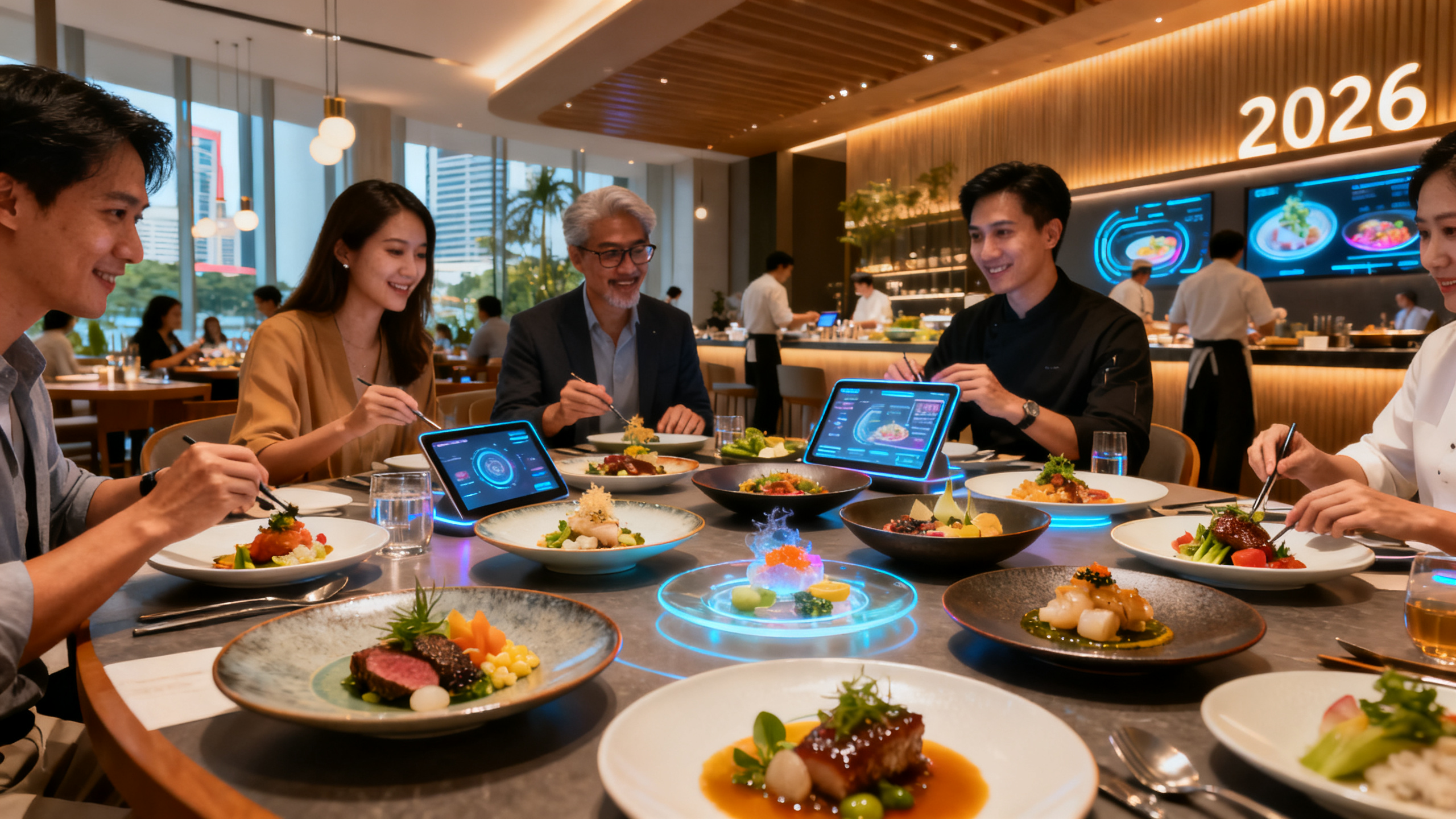
Singapore continues to be a global leader in adopting technology within its food and beverage industry. This year, 2026, sees an exciting blend of innovation and culinary art through AI menu customization, automated kitchens, and augmented reality (AR) dining experiences.
Restaurants are utilizing AI to personalize menus based on customer preferences and dietary restrictions, enhancing satisfaction and efficiency. In futuristic dining hubs, robotic chefs prepare dishes with precision, ensuring consistency and hygiene. Moreover, AR dining invites patrons to interact with their food visually—imagine seeing the story behind your meal or the dish’s journey to your plate through a smartphone or AR glasses. These immersive experiences add a new dimension to dining in Singapore.
Trend 4: Health-Conscious and Functional Foods
Health and wellness continue to influence food trends, with Singaporeans increasingly gravitating towards functional foods that boost immunity, digestion, and overall vitality. The rise of superfoods, fermented items, and adaptogens can be seen across menus in cafes and fine dining spots.
Examples include drinks infused with turmeric, matcha, or kombucha, and dishes featuring fermented ingredients like kimchi or miso that aid gut health. Nutrient-dense bowls combining whole grains, fresh vegetables, and protein sources have become staples for health-conscious consumers, reflecting a broader global trend towards mindful eating.
Conclusion: Embracing the Future of Food in Singapore
Singapore’s 2026 food trends showcase a city that honors its culinary heritage while embracing innovation and sustainability. From sustainable sourcing and heritage dish revivals to tech-enhanced dining and health-focused foods, each trend tells a story of cultural pride, environmental responsibility, and forward-thinking creativity.
For food lovers planning a trip or locals eager to explore, these trends offer countless delicious opportunities to experience Singapore’s food scene in exciting new ways. Remember to visit local markets, try innovative eateries, and support sustainable dining initiatives on your journey through Singapore’s vibrant culinary landscape in 2026.