
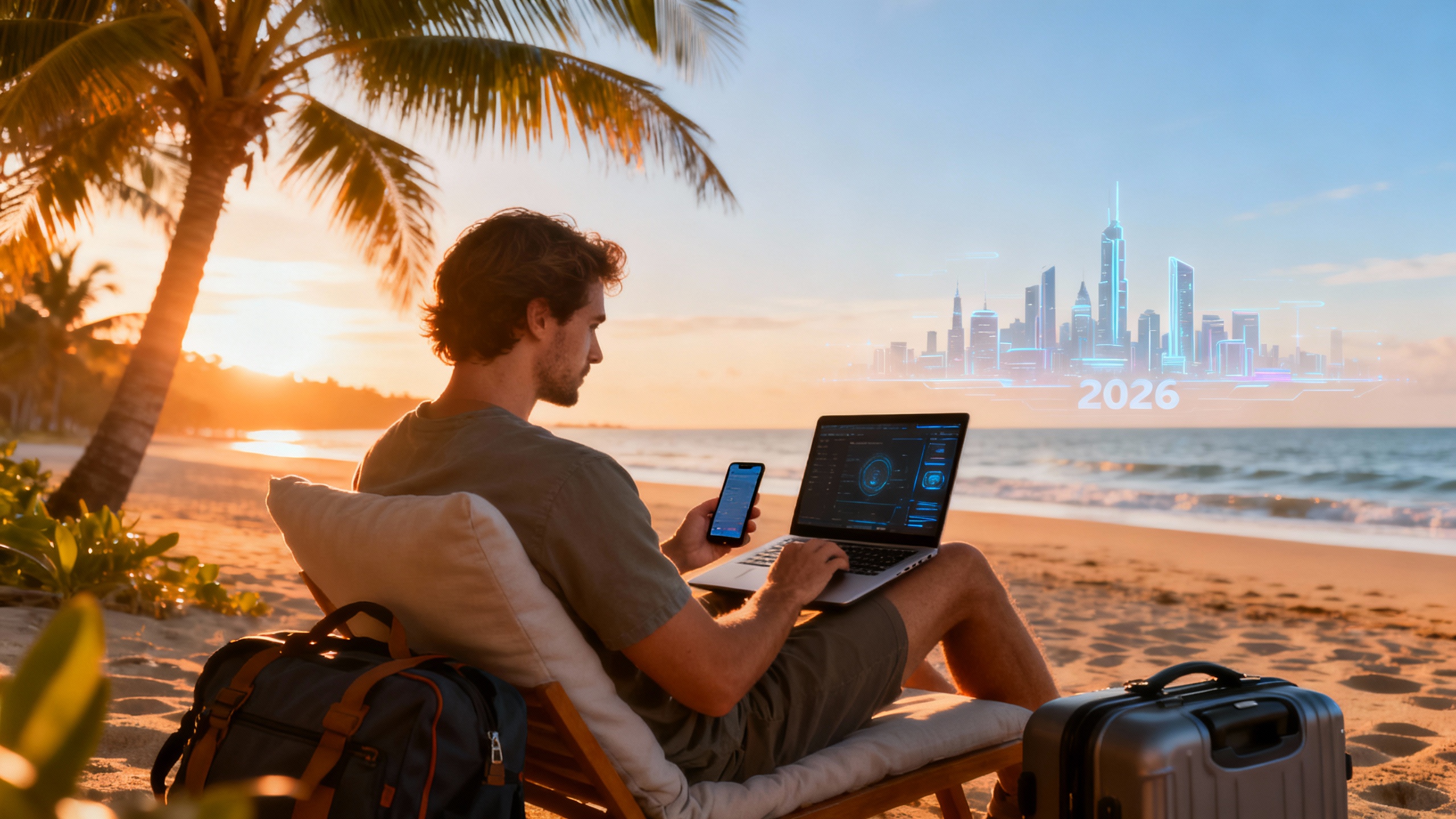
Exploring the Rise of Remote Travel Lifestyles in 2026
The year 2026 marks a transformative period in the travel industry, with remote work reshaping how and where we travel. The fusion of professional responsibilities with the desire for exploration has given rise to a new breed of traveler: the digital nomad. This shift is not just a passing trend but a profound change in our approach to work and leisure.
The Evolution of the Digital Nomad
In 2026, the digital nomad lifestyle has matured beyond its early adopters. Remote work has become a mainstream option, with a significant portion of the workforce embracing the flexibility it offers. This shift has led to a surge in individuals seeking to combine their professional lives with their passion for travel.
Destinations worldwide have recognized this trend and are adapting accordingly. Cities like Lisbon, Bali, and Medellín have introduced special digital nomad visas, providing legal frameworks that allow remote workers to live and work in these locations for extended periods. This not only boosts local economies but also fosters cultural exchange and global connectivity.
Embracing Slow Travel
Contrary to the fast-paced, checklist-driven travel of the past, 2026 has seen a rise in ‘slow travel.’ This approach encourages travelers to immerse themselves in a single destination for extended periods, allowing for deeper cultural engagement and a more sustainable travel experience. Instead of hopping from one city to another, travelers are choosing to spend a month or more in one place, reducing their carbon footprint and gaining a more authentic understanding of local life.
This shift is also influenced by environmental awareness and the desire to reduce the negative impacts of frequent flying. By staying longer in one location, travelers can explore lesser-known areas, support local businesses, and contribute positively to the community they are visiting.
The Role of Technology in Remote Travel
Technology continues to play a pivotal role in facilitating remote travel lifestyles. The advent of eSIM technology has eliminated the need for physical SIM cards, allowing travelers to stay connected seamlessly across borders. This advancement ensures that remote workers can maintain productivity without the hassle of managing multiple SIM cards or searching for local Wi-Fi networks.
Artificial Intelligence (AI) has also become an indispensable tool for travelers. AI-powered platforms now assist in itinerary planning, accommodation bookings, and even local activity suggestions tailored to individual preferences. This personalized approach enhances the travel experience, making it more efficient and enjoyable.
Micro-Cations and Flexible Workations
The concept of ‘micro-cations’—short, frequent trips of 2-4 days—is gaining popularity. These brief getaways allow individuals to explore new destinations without taking extended time off work. Coupled with the rise of flexible workations, where professionals work remotely from vacation spots, this trend offers a balanced approach to work and leisure. It enables individuals to rejuvenate and gain new experiences without compromising their professional commitments.
Skillcations: Merging Travel with Personal Development
In 2026, the traditional vacation is being redefined through ‘skillcations.’ This trend involves using paid time off to pursue personal passions or develop new skills, such as gourmet cooking, falconry, or foraging. According to Hilton’s 2026 trends report, 72% of people are interested in using vacation time to explore personal interests. This approach not only enriches the travel experience but also contributes to personal growth and fulfillment.
Conclusion
The rise of remote travel lifestyles in 2026 signifies a profound shift in how we perceive work and leisure. The integration of professional responsibilities with the desire for exploration has led to more flexible, sustainable, and enriching travel experiences. As technology continues to evolve and destinations adapt to these changes, the future of travel promises to be more personalized, purposeful, and connected than ever before.
Embracing this new era of travel allows individuals to break free from traditional constraints, fostering a global community that values experiences over destinations and personal growth over mere relaxation.